About Mannargudi
Discover the historical, geographical, and cultural profile of the ancient temple town
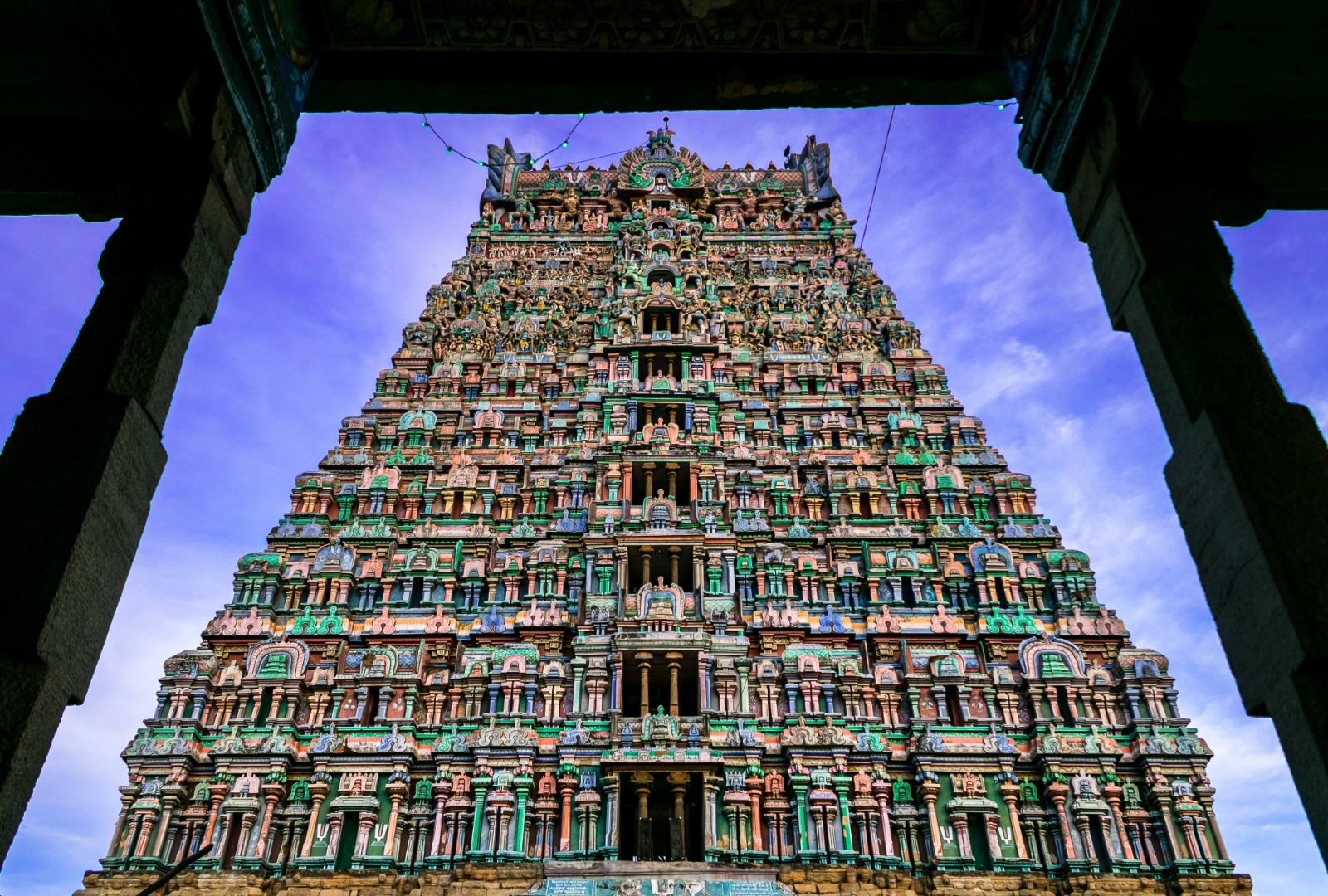
A Historic Gateway of Devotion
Mannargudi is an ancient municipality and key agrarian town in Tiruvarur District, situated in the fertile Cauvery Delta region of Tamil Nadu, India. Historically celebrated for its architectural marvel, the town grew around the massive Sri Rajagopalaswamy Temple, dating back to the medieval Chola era.
Known as Dakshina Dwarka (Southern Dwarka), Mannargudi is a vibrant sanctuary of spiritual heritage, traditional brass-making, delta agriculture, and classical music traditions, representing the true cultural essence of Tamil Nadu's riverine plains.
Chronicles & Heritage
📜 Ancient & Nayak Dynasty Era
Mannargudi's history is deeply woven with the genesis of the Sri Rajagopalaswamy Temple. The temple was first constructed by First Kulothunga Chola (1070–1120 AD) and was then called Rajadhiraja Chaturvedimangalam. The town became a notable center for Vedic learning and religious rituals, surrounded by fertile fields irrigated by Vennar canals.
During the 13th and 14th centuries, the Hoysalas and Vijayanagara monarchs contributed to the temple's expansion, adding massive gopurams. However, it was during the rule of the Thanjavur Nayak dynasty (specifically Raghunatha Nayak and Achyutappa Nayak) that the temple received extensive patronage. The Nayak kings renovated the shrines, constructed the grand 154-ft Rajagopuram, and formalized the grand 18-day Panguni Brahmotsavam festival.
The Maratha rulers of Thanjavur and later the British East India Company continued to respect the town's religious autonomy. Mannargudi was constituted as a municipality in 1866 under British rule, developing modern education and transport links, including the introduction of early railway lines to transport agricultural delta grains.
🌾 Geography, Culture & Economy
Mannargudi is situated on a flat deltaic plain irrigated by Vennar, Pamaniyar, and Koraiyar rivers. It features a warm, tropical climate, typical of coastal delta districts. The town is bordered by lush paddy fields, coconut groves, and small water canals, creating a tranquil rural landscape.
Culture in Mannargudi centers around temple celebrations. The 18-day Panguni Brahmotsavam in March-April is the town's prime event, featuring the pulling of the massive Temple Car and float festival in Haridra Nadhi. The town is also a birthplace of several legendary Carnatic musicians and is famous for traditional bronze casting and metal crafts.
Economically, agricultural trading is the town's primary driver. It serves as a major market for rice, pulses, and sugarcane harvested in nearby villages. Additionally, traditional brass vessel manufacturing, jewelry stores, and handloom textiles support the thriving local bazaar.
District Administration & Leadership
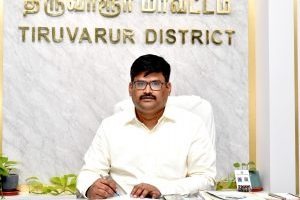
Thiru. V. Mohanachandran, I.A.S.
District Collector, Tiruvarur
Serving as the administrative head of Tiruvarur District, coordinating state schemes, public services, revenue administration, civic amenities, and delta developmental projects.
Member of Parliament (MP)
Thiru. S. Murasoli
Elected representing the Thanjavur Lok Sabha Constituency (under which Mannargudi falls).
Member of Legislative Assembly (MLA)
Thiru. S. Kamaraj
Elected representing the Mannargudi Assembly constituency (since May 2026).
Total Population
66,999 (Census 2011)
Mannargudi municipal population. The taluk population is approximately 3.1 Lakhs.
Demographics
91.34% Literacy Rate
Balanced sex ratio of 1,018 females per 1,000 males, reflecting high educational standards.
Nearby Villages
Mannargudi block comprises multiple villages. The major villages near the town center include:
Home to the Naganathar Shiva Temple and MRG Arts College.
Location of STET Women's College and scenic delta farmlands.
Developing village adjacent to the eastern border of the town.
Agri-centric village serving the local rice trade markets.
Nearby Major Places
Famous religious, ecological, and heritage hubs located nearby:
-
🦆
Vaduvur Bird Sanctuary (14 km) — Beautiful lake hosting migratory storks and birds in winter.
-
🏛️
Thanjavur (40 km) — Historic capital of Chola empire, home to the Brihadeeswarar Temple.
-
🛕
Kumbakonam (38 km) — Renowned temple town famous for Mahamaham tank and metal crafts.
-
🌾
Tiruvarur (28 km) — The district headquarters, birthplace of Carnatic music trinity.